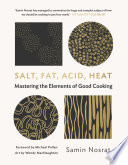
The international sensation – award-winning chef Samin Nosrat distills the four key principles anyone can use to elevate their food and learn to cook instinctively. 'Revolutionary' YOTAM OTTOLENGHI 'A masterpiece' NIGELLA LAWSON A Sunday Times Food Book of the Year and a New York Times bestseller While cooking at Chez Panisse at the start of her career, Samin Nosrat noticed that amid the chaos of the kitchen there were four key principles that her fellow chefs would always fall back on to make their food better: Salt, Fat, Acid and Heat.
To start
Chicken and Garlic Soup ✦
Sahil
Chicken soup with avgolemono
Every culture around the world has a restorative chicken soup. For Greeks it
is kotosoupa avgolemono. I cannot think of a more comforting dish than this
one. The creaminess here is due to the rice, which should be rich in starch,
and the egg and lemon sauce, avgolemono, which also gives it a nice velvety
texture. It is a soup enjoyed in Greece throughout winter, and my grandmother
Rena, who was a master of this soup, always made it on New Year’s Day.
It is traditionally served as a thick broth with the rice in it, with the left-
over boiled chicken often used for a chicken pie. I like to also add carrot and
courgette (zucchini) for flavour and texture, but you can play around with
different vegetables. I always buy a high-quality chicken, preferably organic
or free-range: they have less fat and are full of flavour.
SERVES 4–6
1 x 1.8–2kg (4–4½lb) chicken, cut into 6 pieces
1 tbsp olive oil
1 large onion, peeled and halved
1 small leek, roughly chopped
2 garlic cloves, peeled
1 large celery stick, trimmed and roughly chopped
2 bay leaves
6 black peppercorns
3–4 sprigs of thyme
1 small tomato
80ml (3fl oz) dry white wine
1.5 litres (56fl oz) hot water
2 large carrots, diced
120g (4oz) medium-grain white rice, such as glacé (glutinous)
2 small courgettes (zucchini), diced
2 eggs, at room temperature
Finely grated zest of 1 small lemon and juice of 2
Sea salt and freshly ground black pepper
1 tbsp chopped spring onions (scallions), including the green part (optional),
to serve
Wash the chicken well, pat dry and set aside. (Keep the giblets for another
time.)
Place a large, heavy pan over a medium-high heat. Add the olive oil and
gently sauté the onion, leek, garlic, celery, bay leaves, peppercorns and
thyme for about 8 minutes, stirring, until softened. Add the chicken, turning
the pieces until slightly browned all over. Add the tomato (whole) and pour
in the wine. Season with salt and pour in the water. Cover, reduce the heat to
medium-low and simmer for 50–60 minutes until the chicken is thoroughly
cooked.
Transfer the chicken to a platter and let it cool. Remove the skin and
bones, then shred or cut the meat into small pieces.
Strain the broth and pour it back into the pot. Return it to the stovetop, turn
the heat up to medium-high and adjust the salt if necessary. Add the carrots
and bring to the boil. When it starts boiling, reduce the heat to medium and
add the rice. Let it boil for 10 minutes, then finally add the courgettes. Boil
for another 10 minutes until the veggies and rice are cooked.
Remove the pan from the heat. Ladle about 200ml (7fl oz) of broth through
a sieve into a jug (pitcher) and set aside. Separate the eggs into two bowls.
Beat the yolks with the lemon zest and juice. Whisk the egg whites into a light
meringue (not too stiff). Gradually whisk the egg yolks into the whites until
incorporated (don’t over-whisk).
Carefully and gradually add small amounts of the strained hot soup to the
egg and lemon sauce, whisking constantly. The sauce should look nice and
frothy. Once the soup is all incorporated, pour the mixture into the pot and
stir gently.
Serve the soup with shredded chicken and spring onions (scallions), if
desired, and a grind of black pepper.
Yiouvarlakia, hearty meatball soup
This is one of my favourite Greek comfort dishes. It’s popular all over the
country and is most commonly prepared with egg and lemon sauce, like this
one, or – often during summer – in a tomato-based broth. It was a dish
prepared by Greeks settled in Asia Minor who popularized it in Greece in
the early 1920s, along with several other recipes that greatly shaped what is
called the Urban Athenian Cuisine. What makes the Greek version different
to others is the use of egg and lemon sauce, and the herbs or spices. In parts
of northern Greece and particularly in Naoussa (a famous wine region), this
dish is also known as koukoulia (which means cocoons).
Yiouvarlakia is usually prepared with plain minced (ground) beef or a
combination of half beef, half pork. The sauce here works both as a flavour
enhancer and as a thickener for the broth, giving the soup a lovely creamy
consistency. Good bread is essential when serving this dish – trust me.
SERVES 4–6
Kufte Kebabs
Bhairavi
Shaved Carrot Salad with Ginger and Lime
Bhairavi
Cherry Tomato Confit (With Bread/Croutons) ✦
Khyaati Jain
cherry tomatoes, halved
270g (10oz) tomato passata (sieved tomatoes)
50ml (2fl oz) warm water
70g (2½oz) Kalamata olives, pitted
60g (2oz) feta, crumbled
Sea salt and freshly ground black pepper
Extra virgin olive oil, to serve
Peel and clean/devein the prawns (shrimp), keeping their heads and tails in
place. Season with a little salt and pepper and set aside.
Place a large, ovenproof pan over a medium heat, heat half the olive oil
and sauté the prawns for 1–2 minutes just until they change colour. Transfer
to a plate.
In the same pan, heat the remaining oil and sauté the onion until soft and
glossy. Add the garlic, bay leaves and thyme, stir for another minute, then
pour in the ouzo. Give it a couple of minutes to infuse, then add the halved
tomatoes, stir and pour in the passata and warm water. Season with a little
salt (keep in mind that you’ll be adding feta and olives which are salty) and
plenty of pepper, lower the heat to medium and let it cook for 5–8 minutes
until the sauce thickens.
Meanwhile, preheat the oven to 210°C/190°C fan/410°F/gas mark 6½.
Return the prawns to the pan, add the olives and sprinkle the crumbled feta
on top. Transfer the pan to the oven and cook for another 15 minutes, or until
the feta starts melting. Remove from the oven, drizzle with a little extra
virgin olive oil and serve immediately.
1
Without doubt the best known, most widespread and versatile of Greek cheeses, a PDO product and
the star of myriad Greek dishes. Made primarily with sheep’s milk and sometimes an addition of up to
30 per cent goat’s milk, feta ranges from the very soft, creamy and buttery, to hard, spicy and salty; the
more it ages, the harder and spicier it gets.
2
A dry, anise-flavoured liquor which is served as an aperitif or accompanies food. It is made with a
grape or grain distillate in traditional copper cauldrons, flavoured with a variety of herbs, seeds and
spices. Uniquely Greek (it can only be made in Greece and Cyprus), it is commonly served diluted in
iced water.
Butternut squash fritters with olives and herbs
Fritters made from seasonal vegetables or pulses are prepared in most parts
of Greece, using courgettes (zucchini), aubergines (eggplant), potatoes, leeks
or mixed leafy greens like spinach and sorrel – even nettles. The islands are
particularly big on these kinds of fritters, or pseftokeftedes as they call them,
meaning ‘fake meatballs’. They are primarily a result of the ‘poor kitchen’
and of the long fasting periods of the past, when methods were invented to
replace meat or other animal products.
The fritters are typically fried in order to acquire a crispy outer layer, and
although some home cooks now prefer to bake them, I do insist on the
traditional fried version – they are delightfully crispy on the outside, moist
and fresh on the inside, and they don’t feel heavy or oily at all.
The secret for success here is to let the grated butternut drain well and to
use plenty of chopped fresh herbs and onions. The fritters are typically
served with yogurt or a yogurt-based dip such as tzatziki. Here, I pair it with
a simple and versatile minty yogurt dip, which you can use in many other
recipes.
SERVES 4
350g (12oz) butternut squash, grated (using the big holes of a box grater)
1 tsp salt
1 medium white onion, finely chopped
2 spring onions (scallions), finely chopped
75g (2½oz) pitted green olives, roughly chopped
4 tbsp chopped mint
2 tbsp chopped parsley
2 tbsp chopped dill
2 eggs, lightly beaten
100g (3½oz) feta, crumbled
50g (2oz) plain (all-purpose) flour
1 tsp baking powder
Oil, for frying (I use a light olive oil or sunflower oil)
Finger-Lickin' Pan-Fried Chicken
Rahul J
Buttermilk Chicken Roast (Wings) ✦
Raj
chicken, though tougher, which means it needs to
be gently slow cooked. You can use a chicken instead, in which case the
cooking time will be slightly shorter.
The cheese traditionally used here is called sfela
1
, an ancient, PDO
cheese of the Messinia and Mani regions, also known as ‘the cheese of fire’.
Sfela is not easy to find outside of Greece, but it can be replaced by feta or a
combination of feta and a hard cheese like a spicy, aged kefalotyri or
pecorino. The green olives add a delightful tangy punch, which makes my
tastebuds happy!
The cockerel is usually served over thick spaghetti, bucatini-style pasta or
hylopites, the traditional Greek egg and milk noodles that either look similar
to tagliatelle or can be small and square-shaped – popular with children. It is
the perfect dish to prepare for a Sunday family feast.
SERVES 6
1 cockerel (or free-range chicken), about 2.5kg (5½lb), cut into portions
100ml (3½fl oz) olive oil, plus a splash for the pasta
4 large white onions, roughly chopped
3–4 garlic cloves, finely chopped
2 bay leaves
4–5 allspice berries
1 cinnamon stick
¼ tsp ground cloves
1–2 sprigs of rosemary (or 1 tbsp dried rosemary)
4 tbsp red wine vinegar
1 tbsp tomato purée (paste)
500g (1lb 2oz) tomatoes, puréed in a blender (or use canned)
150ml (5fl oz) hot water
250g (9oz) feta, crumbled
200g (7oz) pitted green olives
1–2 tbsp chopped parsley
500g (1lb 2oz) thick spaghetti (I like to use number 6) or bucatini
Sea salt and freshly ground black pepper
Wash and pat dry the cockerel. Season with a little salt and pepper and let
stand at room temperature for about 30 minutes.
Meanwhile, place a large, wide pot over a medium-high heat. Pour in half
the olive oil. Once hot, add the onions, stir and bring the heat down to low.
Season with salt and black pepper to taste, cover and gently cook for about
20 minutes until soft and glossy. Check the onions occasionally while they
are cooking and gently stir to prevent them from sticking. Once ready, remove
the pot from the heat and, using a slotted spoon, remove the onions to a plate,
leaving the remaining olive oil in the pot.
Place the pot back over a medium-high heat. Pour in enough of the
remaining olive oil to just cover the bottom of the pot and, in batches, brown
the cockerel pieces for about 3–4 minutes on each side, adding more oil
when necessary. Transfer the browned cockerel to a plate.
Bring the heat down to medium-low, add the remaining olive oil and gently
sauté together the garlic, bay leaves, allspice, cinnamon, cloves and
rosemary. Add the vinegar, stir, mix in the tomato purée (paste) and pour in
the tomatoes. Season with salt and pepper to taste and place the cockerel
pieces back in the pot. When the sauce is gently simmering, pour in the hot
water. Cover and gently simmer for about 1½ hours until the meat is tender
and falling off the bone, checking occasionally to make sure it has enough
liquid to cook without burning at the bottom, and adding a little extra water if
needed.
Using a slotted spoon, remove the cockerel portions from the sauce and
place on a platter. Return the sauce to a medium heat and add the cooked
onions. Gently stir and simmer, uncovered, for another 15 minutes. Add the
crumbled feta and olives, season with salt and pepper to taste and let simmer
for another 10 minutes until the sauce thickens. Mix in the chopped parsley
and place the cockerel pieces back in the sauce.
Meanwhile, cook the pasta in boiling salted water, according to the packet
instructions. Drain and add a splash of olive oil.
Serve the cockerel over the cooked pasta, with freshly ground black
pepper, and enjoy!
1
A hard, salty cheese with PDO status, made with sheep’s and goat’s milk, resembling pecorino and
used in a similar way, particularly grated.
OIL
Watermelon summer salad with purslane, capers and feta
The combination of watermelon and feta is an old-school Greek classic that
has made a grand comeback. Watermelon works so well with white cheeses
and it is a wonderful addition in refreshing summer salads, successfully
substituting tomatoes. Ancient Greek doctors used them for hydration, as a
diuretic, and to treat sunburn and sunstroke.
Purslane is a weed that grows like crazy during summer – even in random
pots on my balcony in downtown Athens. It’s packed with vitamins and we
use it a lot in salads – even in a regular Greek salad – and other recipes such
as stews.
The caper plant is another precious weed widely used in the Greek kitchen.
During late spring it starts to grow everywhere, even out of walls and
pavements in the centre of Athens. The Acropolis hill is covered in capers
throughout summer and the islands are full of large wild caper bushes that
climb down steep hills and hang off rocks; those growing near the sea are
considered the best. Capers are very nutritious, packed with vitamins,
minerals and strong antioxidants, and the ancient Greeks believed in the
plant’s magical as well as medicinal powers.
The actual caper is a bud that blooms into a stunning white-pinkish flower
with a violet stamen, although the leaves can also be preserved and used in
recipes. Later on in the summer, the plant produces a little, oblong berry
which in Greece we call ‘caper cucumbers’. These are also preserved in a
similar way as the buds, and they are simply amazing. On certain islands, like
Chios, pickled caper berries are stuffed with garlic cloves and served as a
lovely meze alongside tsipouro or ouzo.
Instead of vinegar, I use agourida, also known as verjus. It has a fresher,
milder flavour compared to vinegar and it’s less tangy than lemon – ideal in
salads, syrups and cocktails.
SERVES 4–6
1 medium red onion, halved and sliced
450g (1lb) peeled watermelon, deseeded and diced
150g (5oz) teardrop or cherry tomatoes, halved
2 Lebanese cucumbers with skin, sliced into rounds
A bunch of purslane, thick stems discarded, separated into small clusters with
leaves
1–2 sprigs of oregano or 1 tsp dried
2 tbsp capers
6–8 Kalamata olives
1 tbsp verjus or red wine vinegar
130g (4½oz) feta, crumbled
100ml (3½fl oz) early harvest olive oil
Flaky sea salt
To soften the sliced onion and make it less astringent, soak in cold water for
10–15 minutes, then drain and pat dry.
Place the watermelon, tomatoes, cucumbers, purslane and onion in a large
bowl. Strip the oregano leaves from the stem, if using fresh, and add to the
bowl. Add the capers and olives, sprinkle with a little flaky sea salt, and pour
in the verjus or vinegar. Gently toss.
Transfer to a salad bowl or platter. Sprinkle with the feta and drizzle with
the olive oil.
TIP To deseed a watermelon without ruining its shape, use a toothpick.
Ladenia, baked flatbread with tomato, onions and capers
This recipe originates from Kimolos, a small Cycladic island that sits next to
Milos. Legend has it that the island was named after its first inhabitant, who
was married to Taurus’ daughter, Side. The island has its own popular dishes,
but the most famous of all is this pie. Resembling a relatively thick-crusted
pizza, this recipe presents ladenia in its most basic form, which I adore. It can
be ‘dressed up’ once baked, with some crumbled or flaked cheese (such as
feta, aged Greek graviera
1
, pecorino or Parmesan). For special occasions, or
when I wish to pair it with a wine or beer, I like to add thin slices of a cured
meat like louza
2
, sliced prosciutto, or a spicy chorizo.
You will need a large, round and slightly deep baking tin/pan (I use one that
is 30–35cm/12–14 inches in diameter).
SERVES 4
Autumn Salad: Roasted Squash, Sage, and Hazelnut
Sreya
Spring Salad: Asparagus and Feta with Mint ✦
Yamini
mint, spring onions (scallions) and a little salt.
Spoon the yogurt over the top of the pie, creating a thin, even layer. Create
another layer with the diced tomato mix on top.
Slice the pie like a pizza and serve it drizzled with a few drops of olive oil
and sprinkled with a little smoked paprika.
Beef dolmades with avgolemono sauce
I believe that everyone has certain dishes that, one way or another, are
inextricably linked with memories of certain people. In my case, beef
dolmades in luscious avgolemono sauce is something I connect to my
grandmother, Rena, who influenced my love of this dish, and I think of her
every single time I make or eat it. Her husband, my grandfather George, a
grand lemon lover, really became an expert in avgolemono sauce. I have
vivid memories of him standing over a bowl with the frothy egg sauce, beating
with a whisk, while my grandmother gently poured in warm broth from the
pot.
Dolmades are prepared all over Greece with different kinds of leaves or
fillings. During winter, cabbage is commonly used, and stuffed cabbage rolls
with pork is one of the traditional dishes prepared in Greece on Christmas
day. This custom is rooted in Byzantine practices and Greek Orthodox
religion, and the cabbage leaves wrapped around the filling stand for the
swaddling clothes that baby Jesus was wrapped in.
Serve with fresh bread.
SERVES 6–8
70–80 vine leaves, fresh or from a jar
500g (1lb 2oz) minced (ground) beef (or half pork, half beef)
1 medium onion, chopped
3 spring onions (scallions), including the green part, chopped
2 tbsp chopped parsley (reserve the stems)
2 tbsp chopped mint (reserve the stems)
2 tbsp chopped dill (reserve the stems)
160ml (5½fl oz) olive oil
90g (3¼oz) short-grain white rice
1 tsp salt
2 tbsp lemon juice
Hot vegetable stock or water
Freshly ground black pepper
Mains
Adas Polo o Morgh Chicken with Lentil Rice
Divya P
Pasta with Broccoli and Bread Crumbs
Lydia
Persian-ish Rice
Monisha
Pork Braised with Chilies
Raj
Chicken Pot Pie ✦
Tanya
chicken, though tougher, which means it needs to
be gently slow cooked. You can use a chicken instead, in which case the
cooking time will be slightly shorter.
The cheese traditionally used here is called sfela
1
, an ancient, PDO
cheese of the Messinia and Mani regions, also known as ‘the cheese of fire’.
Sfela is not easy to find outside of Greece, but it can be replaced by feta or a
combination of feta and a hard cheese like a spicy, aged kefalotyri or
pecorino. The green olives add a delightful tangy punch, which makes my
tastebuds happy!
The cockerel is usually served over thick spaghetti, bucatini-style pasta or
hylopites, the traditional Greek egg and milk noodles that either look similar
to tagliatelle or can be small and square-shaped – popular with children. It is
the perfect dish to prepare for a Sunday family feast.
SERVES 6
1 cockerel (or free-range chicken), about 2.5kg (5½lb), cut into portions
100ml (3½fl oz) olive oil, plus a splash for the pasta
4 large white onions, roughly chopped
3–4 garlic cloves, finely chopped
2 bay leaves
4–5 allspice berries
1 cinnamon stick
¼ tsp ground cloves
1–2 sprigs of rosemary (or 1 tbsp dried rosemary)
4 tbsp red wine vinegar
1 tbsp tomato purée (paste)
500g (1lb 2oz) tomatoes, puréed in a blender (or use canned)
150ml (5fl oz) hot water
250g (9oz) feta, crumbled
200g (7oz) pitted green olives
1–2 tbsp chopped parsley
500g (1lb 2oz) thick spaghetti (I like to use number 6) or bucatini
Sea salt and freshly ground black pepper
Wash and pat dry the cockerel. Season with a little salt and pepper and let
stand at room temperature for about 30 minutes.
Meanwhile, place a large, wide pot over a medium-high heat. Pour in half
the olive oil. Once hot, add the onions, stir and bring the heat down to low.
Season with salt and black pepper to taste, cover and gently cook for about
20 minutes until soft and glossy. Check the onions occasionally while they
are cooking and gently stir to prevent them from sticking. Once ready, remove
the pot from the heat and, using a slotted spoon, remove the onions to a plate,
leaving the remaining olive oil in the pot.
Place the pot back over a medium-high heat. Pour in enough of the
remaining olive oil to just cover the bottom of the pot and, in batches, brown
the cockerel pieces for about 3–4 minutes on each side, adding more oil
when necessary. Transfer the browned cockerel to a plate.
Bring the heat down to medium-low, add the remaining olive oil and gently
sauté together the garlic, bay leaves, allspice, cinnamon, cloves and
rosemary. Add the vinegar, stir, mix in the tomato purée (paste) and pour in
the tomatoes. Season with salt and pepper to taste and place the cockerel
pieces back in the pot. When the sauce is gently simmering, pour in the hot
water. Cover and gently simmer for about 1½ hours until the meat is tender
and falling off the bone, checking occasionally to make sure it has enough
liquid to cook without burning at the bottom, and adding a little extra water if
needed.
Using a slotted spoon, remove the cockerel portions from the sauce and
place on a platter. Return the sauce to a medium heat and add the cooked
onions. Gently stir and simmer, uncovered, for another 15 minutes. Add the
crumbled feta and olives, season with salt and pepper to taste and let simmer
for another 10 minutes until the sauce thickens. Mix in the chopped parsley
and place the cockerel pieces back in the sauce.
Meanwhile, cook the pasta in boiling salted water, according to the packet
instructions. Drain and add a splash of olive oil.
Serve the cockerel over the cooked pasta, with freshly ground black
pepper, and enjoy!
1
A hard, salty cheese with PDO status, made with sheep’s and goat’s milk, resembling pecorino and
used in a similar way, particularly grated.
OIL
Watermelon summer salad with purslane, capers and feta
The combination of watermelon and feta is an old-school Greek classic that
has made a grand comeback. Watermelon works so well with white cheeses
and it is a wonderful addition in refreshing summer salads, successfully
substituting tomatoes. Ancient Greek doctors used them for hydration, as a
diuretic, and to treat sunburn and sunstroke.
Purslane is a weed that grows like crazy during summer – even in random
pots on my balcony in downtown Athens. It’s packed with vitamins and we
use it a lot in salads – even in a regular Greek salad – and other recipes such
as stews.
The caper plant is another precious weed widely used in the Greek kitchen.
During late spring it starts to grow everywhere, even out of walls and
pavements in the centre of Athens. The Acropolis hill is covered in capers
throughout summer and the islands are full of large wild caper bushes that
climb down steep hills and hang off rocks; those growing near the sea are
considered the best. Capers are very nutritious, packed with vitamins,
minerals and strong antioxidants, and the ancient Greeks believed in the
plant’s magical as well as medicinal powers.
The actual caper is a bud that blooms into a stunning white-pinkish flower
with a violet stamen, although the leaves can also be preserved and used in
recipes. Later on in the summer, the plant produces a little, oblong berry
which in Greece we call ‘caper cucumbers’. These are also preserved in a
similar way as the buds, and they are simply amazing. On certain islands, like
Chios, pickled caper berries are stuffed with garlic cloves and served as a
lovely meze alongside tsipouro or ouzo.
Instead of vinegar, I use agourida, also known as verjus. It has a fresher,
milder flavour compared to vinegar and it’s less tangy than lemon – ideal in
salads, syrups and cocktails.
SERVES 4–6
1 medium red onion, halved and sliced
450g (1lb) peeled watermelon, deseeded and diced
150g (5oz) teardrop or cherry tomatoes, halved
2 Lebanese cucumbers with skin, sliced into rounds
A bunch of purslane, thick stems discarded, separated into small clusters with
leaves
1–2 sprigs of oregano or 1 tsp dried
2 tbsp capers
6–8 Kalamata olives
1 tbsp verjus or red wine vinegar
130g (4½oz) feta, crumbled
100ml (3½fl oz) early harvest olive oil
Flaky sea salt
To soften the sliced onion and make it less astringent, soak in cold water for
10–15 minutes, then drain and pat dry.
Place the watermelon, tomatoes, cucumbers, purslane and onion in a large
bowl. Strip the oregano leaves from the stem, if using fresh, and add to the
bowl. Add the capers and olives, sprinkle with a little flaky sea salt, and pour
in the verjus or vinegar. Gently toss.
Transfer to a salad bowl or platter. Sprinkle with the feta and drizzle with
the olive oil.
TIP To deseed a watermelon without ruining its shape, use a toothpick.
Ladenia, baked flatbread with tomato, onions and capers
This recipe originates from Kimolos, a small Cycladic island that sits next to
Milos. Legend has it that the island was named after its first inhabitant, who
was married to Taurus’ daughter, Side. The island has its own popular dishes,
but the most famous of all is this pie. Resembling a relatively thick-crusted
pizza, this recipe presents ladenia in its most basic form, which I adore. It can
be ‘dressed up’ once baked, with some crumbled or flaked cheese (such as
feta, aged Greek graviera
1
, pecorino or Parmesan). For special occasions, or
when I wish to pair it with a wine or beer, I like to add thin slices of a cured
meat like louza
2
, sliced prosciutto, or a spicy chorizo.
You will need a large, round and slightly deep baking tin/pan (I use one that
is 30–35cm/12–14 inches in diameter).
SERVES 4
Pasta al Ragu
Yamini
18 dishes, cooked by 12 members.
✦ marks a recipe you can read here.